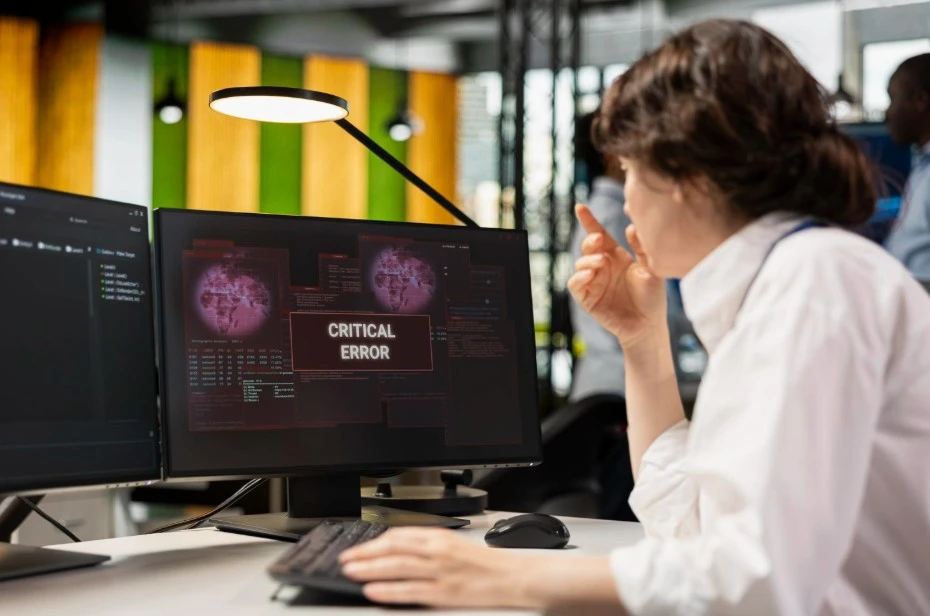
Every company building with AI hits this same moment sooner or later. A system denies a loan to a customer who has banked there for fifteen years. It flags a longtime employee's expense report as fraud. It suggests a treatment that skips what the patient has already been through. The AI just did its job. But something about the call feels off, and nobody could say why.
This is when companies see that AI does not take away the need for judgment, it just shifts it. Someone still has to catch what the system missed, take responsibility, and know when to step in. This is the human decision layer, and how well a company builds it decides whether people keep trusting the AI or slowly lose faith in the company behind it.
For businesses building systems used in banking, healthcare, and manufacturing, this goes well beyond a compliance checkbox. It is the difference between a company that moves fast and gets things wrong, and one that moves fast and still stands behind what it decides.
Decisions AI Can Handle on Its Own
Every company using AI hits this moment eventually. A system turns down a loan for someone who's banked there fifteen years. It flags a longtime employee's expense report as fraud. It recommends a treatment that ignores what the patient's already been through. The AI did exactly what it was built to do. But something feels off, and nobody can explain why.
That's when companies see AI does not remove judgment, it just moves it. Someone still has to catch what the system missed, own the call, and know when to step in. That's the human decision layer, and how well a company builds it decides whether people keep trusting the AI, or lose faith in the company behind it.
For banks, hospitals, and factories, that's not a checkbox. It's the difference between moving fast and being wrong, or moving fast and standing behind your decisions.
Where a Human Needs to Actually Check the Work
Then there are the harder calls. The AI gives an answer that looks fine, but if it is wrong, it actually hurts very badly. A loan that is right on the edge. A treatment suggestion for a patient who does not quite fit the usual pattern. A contract clause that sounds normal but is actually hiding risk. For these, someone needs to actually know the subject, someone who would catch what the AI missed, and who can actually change the call, not just flag it. Because if all someone can do is point something out, they are not really reviewing it. They are just watching it happen.
Decisions That Should Never Go to AI
Some decisions just belong to people, no matter how good the model looks on paper. There's a real trade-off behind them, not just a number a model produced. Should someone lose their job? How does a company handle a long-term client who broke a rule for good reason? How should it deal with a regulator? These need someone you can name, question, and hold responsible. AI can help inform the call, but a person has to own it, because owning a decision means you can explain it to the person it affects, in plain words, not a score.
Real Human Control vs Just Signing Off
Most companies slip up here without realizing it. IBM looked into this and found a simple problem: companies check if a human looked at the decision and not if that human understood it or had the power to say no. When a confident-looking answer comes up in two seconds, most people just approve it, especially in a culture that values speed over asking questions. At that point, the person signing off is not deciding anything, they are just stamping it.
For human control to mean something, three things need to be clear:
- what the person can change
- who they go to when they disagree
- who is responsible once they do.
Without that written down, a rejected AI suggestion just gets logged somewhere while the system keeps running as before, and the next person learns that speaking up does not change anything.
Conclusion
AI-native companies win by getting clear on three things: which decisions the AI can handle alone, which ones need a person checking the thinking behind them, and which ones always need a human hand directly on them. Getting this wrong means slowing the business down with checks that add little, or ending up with decisions nobody can properly defend.
For banking, healthcare, and manufacturing companies building AI into their systems, this needs planning from the start, rather than fixing later. This is the kind of work Wissen Tech does with its clients, helping enterprises use AI while keeping human judgment exactly where it matters.
FAQs
How does a company decide what to automate and what to keep human?
Automate what is easy to reverse, and keep a person in charge of anything tied to one individual's situation.
Does adding a human reviewer make an AI system safer by default?
Only when that reviewer holds real power to change the outcome, otherwise, the check is mainly for show.
What is the actual difference between a human seeing the output and a human overseeing it?
Seeing means looking at the result, while overseeing means holding the power to act on it and answer for it.
Does this matter outside banking and healthcare?
The stakes run higher there, yet the same logic applies to manufacturing exceptions and retail pricing calls too.